

Pushkar Lake, also known as Pushkar Sarovar, is a sacred lake in Pushkar, Rajasthan, surrounded by ghats and temples. Its waterside circuit offers a way to see the city’s religious heritage while keeping local customs in mind.
- It is the most sacred of Rajasthan’s lakes.
- The lake is surrounded by 52 ghats.
- A footbridge completes a circuit around the lake.
- More than 500 temples dot its banks.
Understanding Pushkar Lake and its ghats
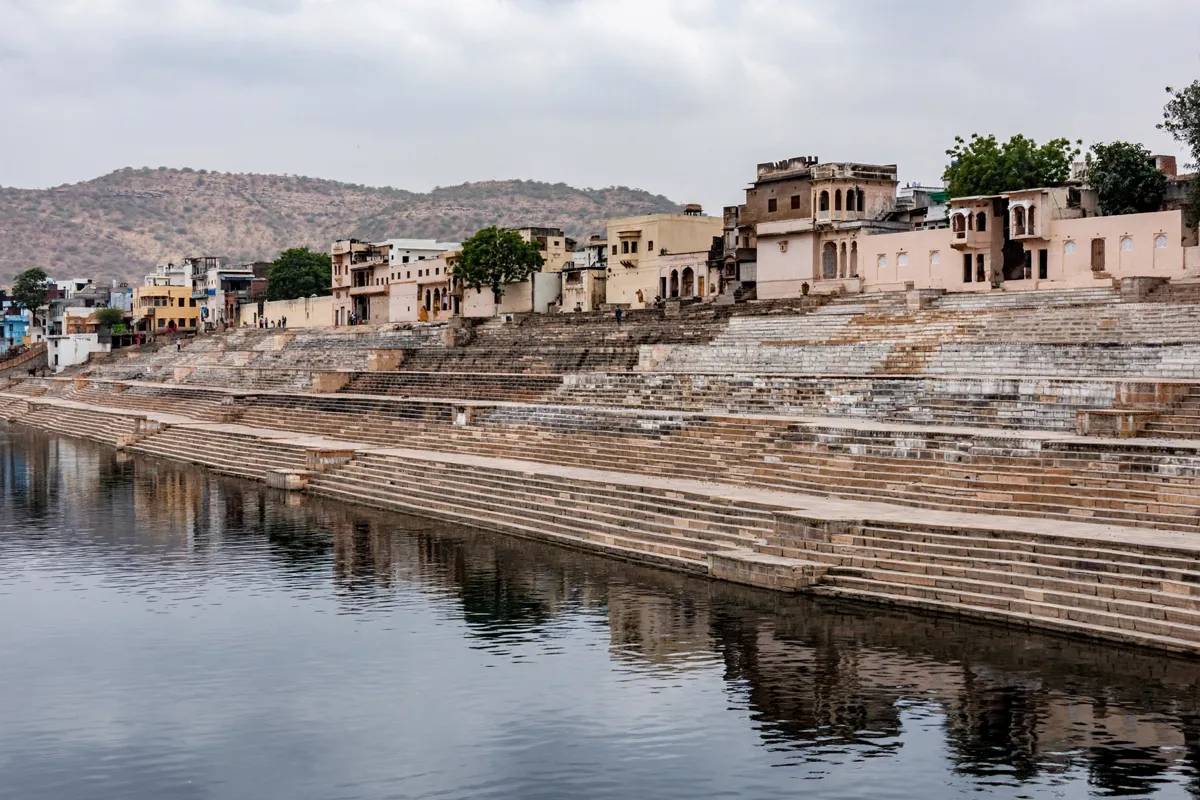
Pushkar Lake’s ghats form a ring of bathing steps around a sacred body of water. In the local origin story, a lotus fell from Lord Brahma’s hands and the lake was born. The lake sits amid the Aravalli range, desert and hills.
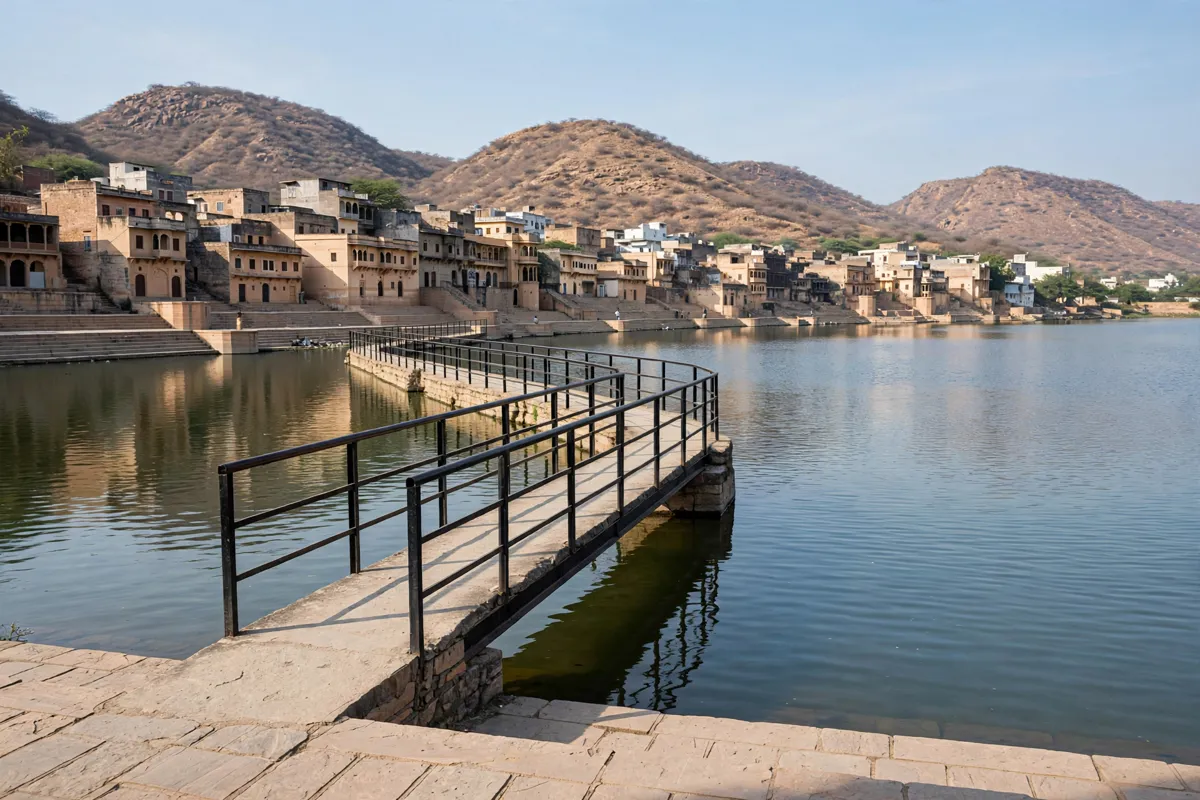
The lake has 52 bathing ghats, with Brahma Ghat, Gau Ghat, Gangaur Ghat, Badri Ghat and Varah Ghat among the older ones. A footbridge completes the circuit and facilitates pilgrims’ parikrama, or circumambulation of the lake.
Water levels change considerably between the rainy and summer seasons. The lake is replenished mainly by monsoon rainfall in July and August, so its appearance can vary with the season.
For a nearby temple visit, the guide to Jagatpita Brahma Mandir covers another part of Pushkar’s religious heritage.
Planning a respectful lakeside walk
A walk around Pushkar Lake follows the ghats and the footbridge, creating a circuit used by pilgrims as well as people taking in the lakeside setting. You can pause at the different ghat areas, but treat the water and bathing spaces as places of worship rather than ordinary public spaces.
Hotel Bharatpur Palace is a three-star hotel; Pushkar city centre is about 10 minutes on foot or 8 minutes by car from this three-star hotel in Pushkar. You can make the lake circuit part of a walk through town.
Pushkar Main Bazaar brings the walk into the town’s shopping streets, where you can browse local shops and market stalls.
What to know about local customs
Respect for worshippers, modest dress and care around the water are sensible principles at Pushkar Lake. A travel journal published in 2011 reproduced a notice attributed to the Pushkar Municipal Board asking visitors not to photograph women bathing, to respect the lake’s religious sanctity, dress decently, keep shoes out of the water and help maintain cleanliness.
Since the notice’s current status is unclear, you can treat it as a reminder to be considerate rather than a confirmed statement of current rules.
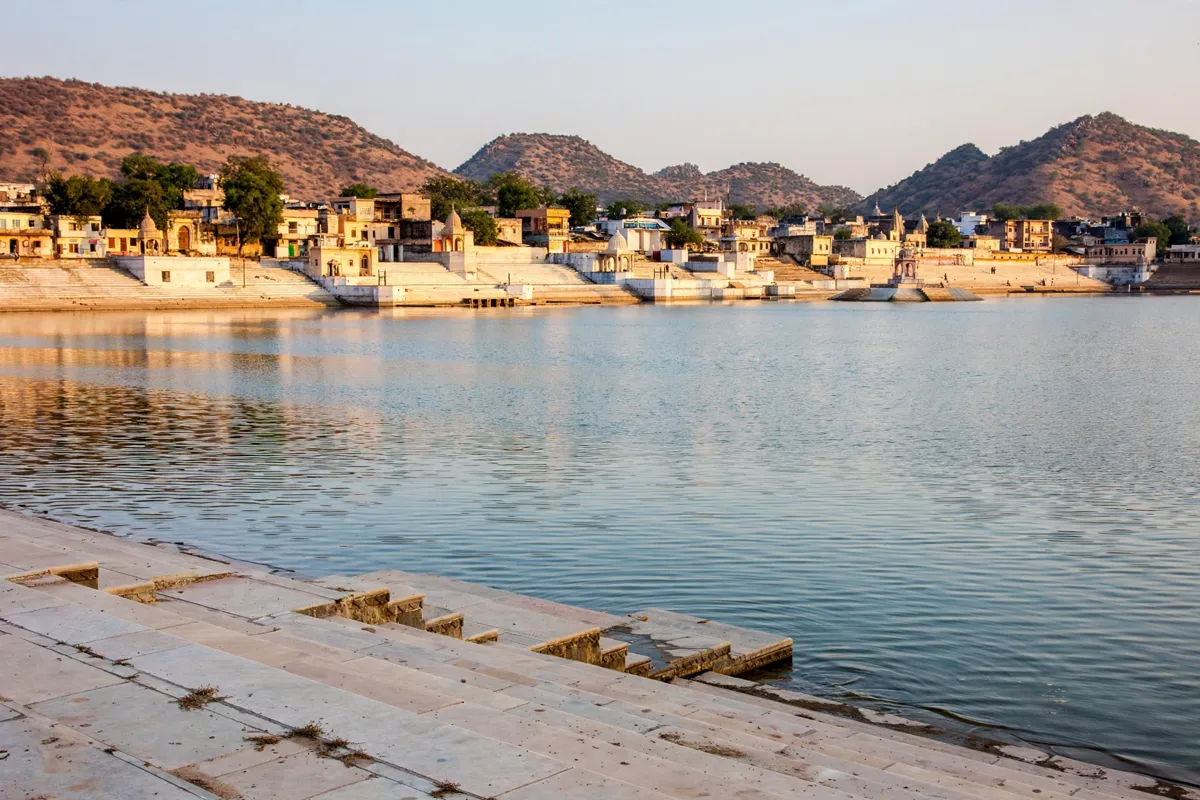
Devotees believe bathing in the lake on Kartik Poornima, during the Pushkar Fair, will nullify sins and cure skin diseases. This belief helps explain the religious importance of the ghats; give people using them for worship and bathing space and privacy.
Pairing the lake with nearby sights
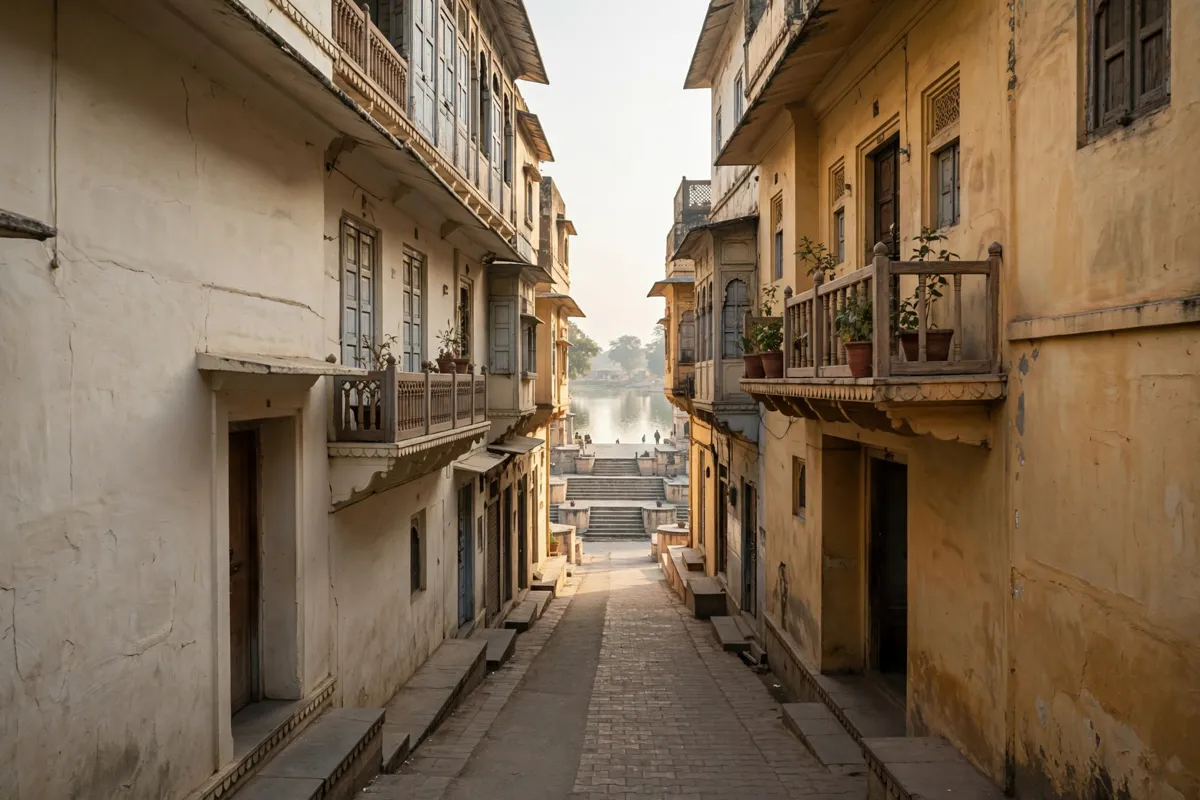
Pushkar’s lakeside temples and town streets make it possible to pair the ghats with other local sights. More than 500 temples dot the lake’s banks, so you can include a temple stop alongside time by the water.
You can follow a one-day Pushkar route from lake to bazaar to link the ghats with the town’s market streets.
Before you go: Check the official Rajasthan Tourism site before you go for current visitor guidance.
FAQs
What is Pushkar Lake also called?
It is also known as Pushkar Sarovar.
How many ghats are around Pushkar Lake?
Pushkar Lake has 52 bathing ghats.
What is the footbridge used for?
It completes the circuit around the lake and facilitates pilgrims’ parikrama.
Why is Pushkar Lake sacred?
It is considered the most sacred of Rajasthan’s lakes. The local origin story links its formation to a lotus falling from Lord Brahma’s hands.